Integrating the Samovar Icon from Russia Collection into Modern Visual Design
In the vast landscape of digital asset libraries, finding culturally specific iconography that balances historical accuracy with contemporary design standards is a frequent challenge for creators. The Samovar Icon from Russia Collection addresses this niche by providing a stylized yet recognizable representation of traditional Russian tea culture. Unlike generic clip art, this asset serves as a bridge between heritage and modern interface design, offering professionals and hobbyists a versatile tool for projects requiring Slavic thematic elements. Understanding the technical specifications and cultural weight of this symbol is essential for maximizing its utility across web design, infographics, and branding materials.
Cultural Semantics and Visual Recognition
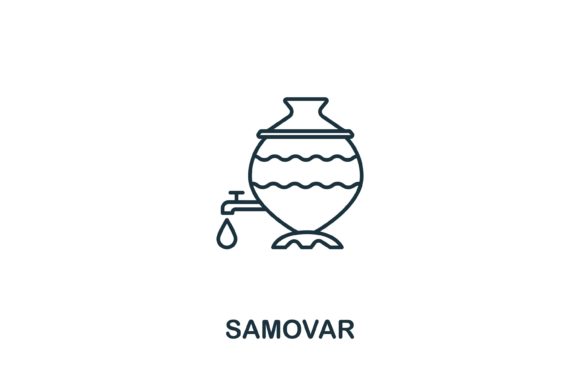
The samovar is more than a vessel for boiling water; it is a profound symbol of hospitality, family gathering, and domestic warmth in Russian tradition. When utilizing the Samovar icon from russia collection, designers are leveraging centuries of semiotic association. For an international audience, the distinct silhouette—typically featuring a central urn shape, spigot, and handles—immediately signals "Russia" or "Eastern Europe" without the need for text. This instant recognition makes it invaluable for travel agencies, cultural blogs, restaurant menus, and educational platforms focusing on Slavic studies.
However, the effectiveness of the icon depends on its stylistic execution. A hyper-realistic rendering might clash with a minimalist website, while an overly abstract version might lose its cultural identity. The simple line art style provided in this collection strikes a necessary balance. It retains the defining characteristics of the object while stripping away unnecessary texture, allowing it to function as a universal signifier rather than a detailed illustration. This reductionist approach ensures the symbol remains legible at small sizes, such as in navigation bars or mobile app interfaces, where complex details would otherwise blur into visual noise.
Technical Versatility: EPS and JPG Formats
Professional workflows demand flexibility, and the inclusion of both EPS and JPG files ensures the Samovar Icon from Russia Collection fits seamlessly into various production pipelines. Understanding when to use each format is critical for maintaining quality.
- EPS (Encapsulated PostScript): This vector-based format is the primary deliverable for professional designers. Because it uses mathematical paths rather than pixels, the EPS file allows for infinite scaling without loss of resolution. Whether you are designing a business card or a massive billboard, the lines remain crisp. Furthermore, EPS files are fully editable in software like Adobe Illustrator or CorelDRAW. You can adjust stroke width, change colors to match brand guidelines, or combine the samovar with other vector elements to create composite illustrations.
- JPG (Joint Photographic Experts Group): While raster-based, the included JPG serves immediate needs for non-designers or quick mockups. It is ideal for inserting directly into presentation slides, word processing documents, or social media posts where vector editing is not required. Having a pre-rendered high-resolution JPG saves time for users who lack vector software but still need a clean, professional-looking symbol for templates and infographics.
Practical Applications in Web and Print Media
The utility of a simple line Samovar icon for templates, web design and infographics extends far beyond mere decoration. In user experience (UX) design, icons serve as cognitive anchors that help users navigate content quickly. For a website dedicated to Russian cuisine, a samovar icon next to a "Beverages" or "Tea Ceremony" menu item reduces cognitive load compared to text-only labels. In e-commerce contexts selling imported goods, this icon can denote product origin or category, enhancing filter systems and improving discoverability.
In the realm of data visualization and infographics, consistency is paramount. The line-art aesthetic of this icon allows it to coexist harmoniously with other symbols in a unified set. If an infographic compares tea consumption habits across different nations, using a solid, filled icon for one country and a delicate line icon for another creates visual dissonance. The Samovar icon from russia collection adheres to standard stroke weights and geometric simplification common in modern icon sets, ensuring it pairs well with generic symbols like globes, cups, or clocks. This coherence helps maintain the viewer's focus on the data rather than being distracted by mismatched artistic styles.
Customization and Brand Alignment
One of the significant advantages of acquiring an editable vector asset is the ability to tailor the symbol, logo vector graphics to specific brand identities. A luxury tea importer might opt for a thin, elegant gold stroke to convey sophistication, while a children’s educational app might thicken the lines and apply bright, primary colors to appear friendly and accessible. The base geometry of the samovar remains constant, preserving its recognizability, while the stylistic overlay adapts to the emotional tone of the project.
For template creators, this adaptability is a selling point. Templates must be neutral enough to suit multiple clients yet distinctive enough to have character. Including a customizable samovar icon adds regional specificity without locking the template into a rigid aesthetic. Users can easily recolor the vector to match their corporate palette, making the template feel bespoke rather than generic. This ease of editing transforms a static graphic into a dynamic design component that evolves with the user's needs.
Educational and Research Contexts
Beyond commercial design, accurate iconography plays a vital role in academia and education. Researchers presenting papers on Eurasian material culture or educators creating lesson plans on global traditions require visuals that respect the subject matter. Clip art often perpetuates stereotypes or inaccuracies, whereas a professionally designed Samovar Icon from Russia Collection offers a respectful, standardized representation. In digital textbooks or online learning modules, these icons break up dense text and provide visual cues that aid memory retention. The clean line style avoids distracting ornamentation, keeping the learner’s attention focused on the educational content while reinforcing the cultural context through appropriate symbolism.
Considerations for Cross-Cultural Communication
When deploying culturally specific symbols, designers must consider the audience's level of familiarity. While the samovar is iconic within Russia and neighboring regions, audiences in other parts of the world may confuse it with similar vessels from other cultures or simply view it as an abstract shape. Therefore, the Samovar icon from russia collection works best when supported by contextual cues. Pairing the icon with Cyrillic typography, traditional color schemes (such as Khokhloma red and gold), or complementary imagery like matryoshka dolls reinforces the intended meaning.
Conversely, in multicultural designs aiming for neutrality, the simplified line art prevents the icon from dominating the composition. It becomes part of a larger visual language of diversity rather than a singular focal point. This duality—being distinct enough to represent a specific culture yet simple enough to integrate into broader systems—is what defines high-quality ethnic iconography. Designers should always test the icon at various sizes and against different backgrounds to ensure the negative space within the line work does not collapse, which could render the samovar unrecognizable.
Optimizing Workflow with Ready-to-Use Assets
Time efficiency is a crucial metric for freelancers and agencies alike. Creating a custom samovar icon from scratch requires research, sketching, digitizing, and refining—a process that can take hours. Utilizing a pre-made symbol, logo vector graphics package eliminates this overhead. The "easy to edit and use" nature of this collection means that even junior designers or non-specialists can implement professional-grade cultural assets without extensive training. The organized file structure and standard compatibility ensure that the asset integrates smoothly into existing libraries, reducing friction in the creative process.
Furthermore, licensing clarity associated with dedicated collections provides peace of mind for commercial projects. Using random images found via search engines carries legal risks regarding attribution and usage rights. Sourcing from a verified collection ensures that the Samovar Icon from Russia Collection is cleared for the intended application, whether personal, educational, or commercial. This reliability is as important as the aesthetic quality, particularly for business owners and researchers who cannot afford copyright complications. By combining cultural authenticity, technical flexibility, and practical usability, this icon set serves as a foundational element for any project touching upon Russian heritage in the digital age.