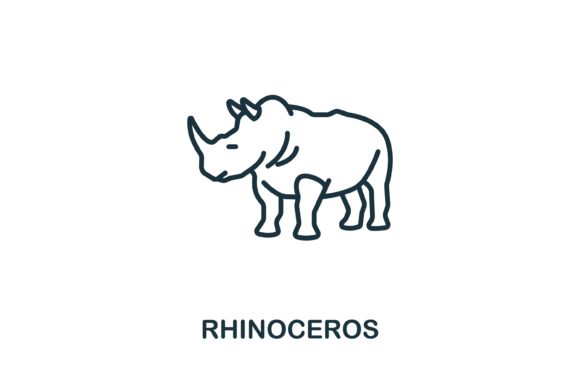
Rhinoceros Icon: Simple Line Vector for Design
When building a visual identity or creating educational content, finding the right balance between detail and simplicity is often a challenge. The rhinoceros is a powerful symbol in nature, representing strength, resilience, and ancient heritage. However, incorporating such a complex animal into modern web design or infographics requires a stylized approach. A simple line rhinoceros icon strips away unnecessary noise, leaving behind a clean, recognizable silhouette that communicates effectively at any size. This specific vector graphic from the wild animals collection is designed to bridge the gap between organic subject matter and digital precision, offering creators a versatile tool for both personal projects and commercial branding.
Understanding the Value of Minimalist Wildlife Graphics
In contemporary design, less is frequently more. While photorealistic illustrations have their place, they can often clutter a user interface or distract from key data points in an infographic. The simple line art style serves a distinct functional purpose. It reduces cognitive load, allowing viewers to instantly recognize the subject without processing excessive visual information. For a rhinoceros, which has a distinctive but bulky profile, line work highlights the essential curves of the horn, ear, and back without the heaviness of solid fills or shading.
This aesthetic is particularly valuable for professionals who need consistency across different media. Whether you are designing a mobile app icon, a header for a conservation blog, or a logo for an outdoor brand, the minimalist approach ensures the graphic remains legible even when scaled down to favicon size. The appeal lies in its adaptability; it feels equally at home on a sleek corporate website as it does on a playful educational worksheet for children. By choosing a vector-based line icon, you are investing in a graphic asset that prioritizes clarity and scalability over decorative complexity.
Practical Applications Across Industries
The versatility of this rhinoceros symbol extends far beyond generic decoration. Different sectors utilize wildlife imagery to convey specific messages, and having a high-quality, editable source file makes implementation seamless. Consider how various professionals might apply this asset:
- Web Designers and UI Specialists: Use the icon as a navigation element for nature-related categories, a loading animation base, or a subtle background pattern. The clean lines integrate well with modern flat design trends and dark mode interfaces.
- Educators and Content Creators: Enhance biology lessons, zoo field trip guides, or geography presentations. A consistent visual style helps students associate concepts quickly, making learning materials more engaging and professional.
- Conservation Organizations: Non-profits focused on endangered species protection need imagery that evokes empathy without being overly aggressive. A gentle line drawing suggests care and fragility, supporting fundraising campaigns and awareness initiatives effectively.
- Marketers and Brand Strategists: Incorporate the rhino as a mascot or secondary logo mark for brands emphasizing durability, reliability, or eco-friendliness. The vector format allows for easy color adjustments to match specific brand palettes.
- Print and Merchandise Designers: Create t-shirts, tote bags, stickers, or posters. Because the design is vector-based, it prints crisply on everything from business cards to large-format banners without pixelation.
Technical Advantages of EPS and JPG Formats
One of the most critical aspects of acquiring digital assets is ensuring you receive the correct file types for your workflow. This rhinoceros icon package includes both EPS and JPG files, addressing the needs of both novice users and seasoned graphic designers. Understanding the difference between these formats is essential for getting the best results.
The EPS (Encapsulated PostScript) file is your master copy. As a vector format, it is composed of mathematical paths rather than pixels. This means you can resize the rhinoceros to the size of a billboard or shrink it to a postage stamp, and the lines will remain perfectly sharp. More importantly, the EPS file is fully editable. If you use software like Adobe Illustrator, CorelDRAW, or Affinity Designer, you can change the stroke width, adjust the curve of the horn, modify the color, or even combine the icon with text to create a custom lockup. This level of control transforms a stock asset into a bespoke design element tailored to your specific project requirements.
The JPG file serves as a convenient, ready-to-use raster image. It is ideal for quick mockups, inserting directly into Word documents, PowerPoint slides, or social media posts where vector editing is not required. Having both formats ensures that you are never blocked by technical limitations, regardless of your skill level or the software you currently own.
Key Considerations Before Implementation
While a simple line icon is inherently flexible, thoughtful application yields the best outcomes. Before integrating the rhinoceros graphic into your next project, consider the context and the message you intend to send. Visual symbols carry weight, and alignment between the image and your content is crucial for authenticity.
First, evaluate the stroke weight relative to your overall design system. If your website uses thin, elegant typography, ensure the icon’s line thickness complements rather than overwhelms the text. Conversely, if your brand is bold and industrial, you may want to increase the stroke width within the EPS file to maintain visual harmony. Consistency in line weight across all icons in a set creates a polished, professional appearance that builds trust with your audience.
Second, think about cultural and contextual relevance. The rhinoceros is a potent symbol, but it also represents a species under severe threat. If used in a commercial context, ensure the usage is respectful and appropriate. Avoid pairing the icon with messaging that contradicts conservation values unless done intentionally for satire or critique. In educational settings, accuracy matters; while stylized, the icon should still be anatomically suggestive enough to be identifiable as a rhino rather than a generic quadruped.
Finally, consider licensing and usage rights. Always verify that the asset license covers your intended use case, especially for commercial products or large-scale distribution. Knowing you have the proper rights to edit, reproduce, and monetize designs derived from this icon provides peace of mind and protects your business from legal complications. When used responsibly and creatively, this simple line rhinoceros becomes more than just a clip-art image; it becomes a foundational element of effective visual communication.
Enhancing Creativity Through Editable Assets
Ultimately, the goal of providing an easy-to-edit vector graphic is to empower your creativity. Static images limit what you can achieve, but an editable EPS file invites experimentation. You might decide to break the line to create a sense of movement, add geometric accents to modernize the look, or integrate the rhino silhouette into a larger landscape scene. The ability to manipulate the source material means the icon can evolve alongside your project.
For beginners, starting with a well-drawn template removes the intimidation of drawing complex animals from scratch. It serves as a learning tool, allowing you to study how professional illustrators simplify forms into essential lines. For experts, it saves hours of drafting time, freeing up mental energy for higher-level conceptual work. Whether you are crafting a logo for a safari lodge, designing an infographic about biodiversity loss, or simply adding a touch of wilderness to a newsletter, this rhinoceros icon provides a reliable, high-quality foundation. By combining aesthetic simplicity with technical robustness, it supports a wide spectrum of creative goals while maintaining the dignity and power of the animal it represents.