Beads Icon: A Versatile Vector Asset for Sewing and Craft Design
In the expansive world of digital design and web development, finding the perfect visual metaphor can often be as intricate as threading a needle. For creators working within the niches of fashion, textiles, DIY crafts, or e-commerce, generic imagery rarely suffices. This is where the specialized Beads Icon becomes an essential asset. Far more than a simple graphic, this symbol serves as a functional bridge between traditional sewing equipment collections and modern digital interfaces. Whether you are building a template for a jewelry maker, designing an infographic about textile history, or creating a logo for a bespoke tailor, understanding the utility and application of this specific vector graphic is crucial for effective visual communication.
The Intersection of Tradition and Digital Utility
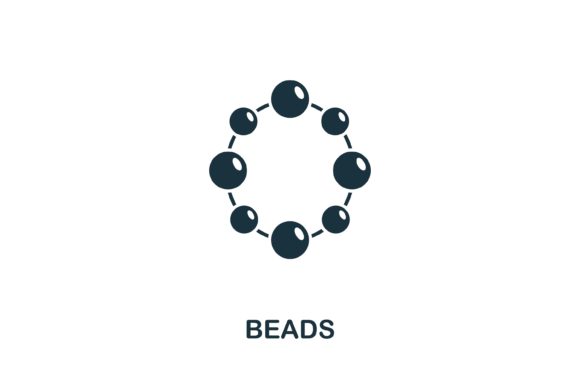
At its core, the Beads Icon represents a tangible element of the physical crafting world translated into a scalable digital format. In the context of sewing equipment collections, beads are not merely decorative; they represent precision, patience, and detail. When this concept is adapted for web design and infographics, it carries those same connotations. Users searching for this asset are typically looking to evoke a sense of handmade quality or artisanal expertise without resorting to heavy, pixelated photography.
The primary value of this icon lies in its duality. It functions simultaneously as a literal representation of a sewing supply and as an abstract symbol for creativity and assembly. For business owners and online users, this versatility means the graphic can serve multiple roles across a single project. It might act as a bullet point in a list of services, a central element in a brand identity, or a navigational cue on a craft-focused website. The transition from physical object to digital symbol requires a design that balances recognition with stylistic flexibility, ensuring it remains legible whether displayed at 16 pixels or 16 inches.
Technical Specifications and File Formats
When acquiring a Beads Icon for professional use, the technical delivery format dictates its long-term usefulness. High-quality assets in this category typically come with two distinct file types, each serving a specific purpose in the design workflow:
- EPS (Encapsulated PostScript): This is the industry standard for vector graphics. An EPS file allows designers to scale the Beads Icon infinitely without any loss of resolution. More importantly, it is fully editable. If your brand color is teal but the icon is red, the EPS file allows you to change the fill color instantly in Adobe Illustrator or similar software. You can also adjust stroke weights, reshape individual beads, or combine the icon with other vector elements seamlessly.
- JPG (Joint Photographic Experts Group): While less flexible than the vector counterpart, the JPG file provides immediate utility for non-designers. It is a rasterized version ready for drag-and-drop use in presentation software, basic website builders, or social media posts. Having this format included ensures that even users without advanced graphic design skills can utilize the asset immediately.
This dual-format approach ensures that the asset remains accessible to both seasoned professionals requiring deep customization and general consumers needing a quick visual solution.
Practical Applications Across Industries
The true test of any design asset is its applicability in real-world scenarios. The Beads Icon transcends simple decoration, offering functional solutions for various sectors. Understanding these applications helps creators evaluate whether this specific symbol aligns with their current project needs.
E-Commerce and Retail Navigation
For online stores selling sewing supplies, fabric, or handmade jewelry, user experience (UX) hinges on intuitive navigation. Text-heavy menus can overwhelm shoppers. Integrating a clean Beads Icon into category filters or menu bars provides an instant visual anchor. Customers scanning a page can identify the "Notions," "Embellishments," or "Jewelry Making" sections faster than they can read text labels. In this context, the icon acts as a cognitive shortcut, reducing friction in the shopping journey and potentially improving conversion rates through clearer site architecture.
Educational Content and Infographics
Content creators focusing on tutorials, historical overviews, or process explanations rely heavily on visual pacing. A wall of text describing how to thread a bead or the history of glasswork can cause reader fatigue. By interspersing a stylized Beads Icon throughout educational content, writers can break up dense information and reinforce key concepts. In infographics, the icon serves as a data visualization tool, representing quantities, steps in a process, or categories of materials. Its simple illustration style ensures it supports the data rather than competing with it for attention.
Branding and Identity Design
For tailors, seamstresses, and craft influencers, the Beads Icon often forms the foundation of a logo or brand mark. Because it is a recognized symbol within the community, it communicates the nature of the business instantly. However, successful branding requires modification. Designers often pair the icon with custom typography or alter its composition to create a unique trademark. The vector nature of the EPS file is critical here, allowing the symbol to be embroidered onto physical tags, printed on business cards, or displayed as a favicon, all while maintaining crisp edges and consistent proportions.
Evaluating Suitability for Your Project
While the Beads Icon is a powerful tool, it is not universally appropriate. Creators must critically assess whether this specific symbol aligns with their message and audience expectations. Blindly adopting trending graphics can lead to mixed messaging or visual dissonance.
Strengths and Advantages
The primary strength of this icon is its semantic clarity within the crafting niche. There is little ambiguity; viewers understand what it represents almost instantly. Additionally, the "simple illustration" aesthetic mentioned in product descriptions is a deliberate feature, not a limitation. Minimalist icons load faster on websites, print more clearly on low-resolution devices, and tend to age better than hyper-realistic or overly trendy graphics. The ease of editing provided by the EPS format further extends the asset's lifespan, allowing it to evolve alongside a brand’s visual identity.
Considerations and Limitations
Despite its utility, there are practical limitations to consider. The Beads Icon is inherently niche. Using it on a technology blog or a financial services site would likely confuse users unless employed as a very specific metaphor for "granular data" or "connecting pieces." Furthermore, because it is a common symbol, uniqueness is not guaranteed out of the box. Relying solely on the stock JPG without customization may result in a generic appearance that fails to distinguish a brand from competitors.
Another consideration is cultural and stylistic alignment. Beads vary significantly across cultures—from seed beads used in Indigenous art to glass beads in European fashion. A generic Beads Icon may default to a Western or standardized aesthetic. Professionals working with specific cultural traditions should verify that the icon’s depiction respects and accurately reflects the materials relevant to their specific audience. If the icon depicts plastic round beads but your business specializes in antique Venetian glass, the mismatch could undermine perceived expertise.
Best Practices for Implementation
To maximize the effectiveness of the Beads Icon, users should follow established design principles that prioritize accessibility and coherence.
- Maintain Visual Consistency: If using the Beads Icon alongside other symbols (e.g., scissors, thread spools, needles), ensure they share the same line weight, corner radius, and fill style. Mixing a flat icon with a 3D-rendered one creates visual noise.
- Prioritize Accessibility: When using the icon on the web, always include descriptive alt text. Screen readers cannot interpret the visual metaphor of beads; they need text like "Category: Sewing Notions" or "Step 3: Add Embellishments" to convey meaning to visually impaired users.
- Test at Multiple Sizes: Before finalizing a design, test the EPS export at the smallest intended size. Intricate details in a bead illustration may disappear when scaled down to a mobile app icon or favicon. Simplification is often necessary for small-scale applications.
- Leverage Negative Space: Effective icon design uses empty space as actively as filled space. Ensure the Beads Icon has adequate padding when placed next to text or other elements to prevent visual crowding.
Making the Right Choice for Creative Projects
Ultimately, the decision to incorporate a Beads Icon should be driven by function rather than mere availability. For general consumers and hobbyists, the included JPG offers a low-barrier entry to enhancing personal projects or blogs. For professionals and business owners, the EPS file represents a foundational design element that supports scalability and brand evolution.
By understanding the technical capabilities, appropriate use cases, and potential limitations of this asset, creators can move beyond treating it as a simple clip-art addition. Instead, it becomes a strategic component of a larger visual language. Whether illustrating a complex sewing tutorial, navigating an e-commerce platform, or defining a brand identity, the Beads Icon proves that even the simplest symbols can carry significant weight when applied with intention and expertise. The key lies in recognizing that this asset is not just a picture of a sewing supply, but a versatile tool for communication in the digital crafting ecosystem.