Kalashnikov Assault Rifle Icon: A Versatile Vector Resource for Professional Design
In the realm of digital design, infographic creation, and editorial illustration, finding precise and culturally accurate visual assets is often a significant hurdle. The Kalashnikov Assault Rifle icon serves as a critical graphical element for projects requiring specific military symbolism, historical context, or geopolitical representation. Sourced from a dedicated Russia collection, this simple line vector graphic bridges the gap between complex technical illustrations and clean, modern web aesthetics. For designers, editors, and content creators, understanding the utility, format flexibility, and appropriate application of this asset is essential for maintaining professional standards while meeting tight production deadlines.
Defining the Asset and Its Visual Language
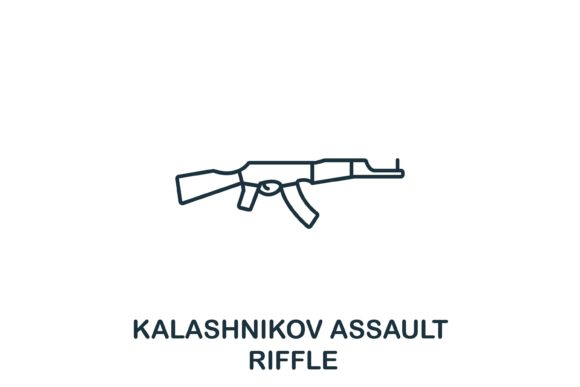
The Kalashnikov Assault Rifle icon is not merely a picture of a weapon; it is a stylized symbol designed for communication rather than technical instruction. Unlike photorealistic stock images that can appear aggressive or cluttered in a user interface, this simple line icon utilizes minimal strokes to convey immediate recognition. It captures the distinct silhouette of the AK platform—specifically the curved magazine, the gas tube above the barrel, and the characteristic stock shape—without unnecessary detail.
This reductionist approach is intentional. In vector graphics, clarity is paramount. The icon functions as a semiotic shorthand, allowing viewers to instantly associate the image with concepts such as Russian military history, defense industry analysis, conflict reporting, or tactical gaming. By stripping away shading and texture, the design ensures that the symbol remains legible at any size, from a 16-pixel favicon to a large-format banner. This visual economy makes the Kalashnikov Assault Rifle icon an indispensable tool for templates where space is limited but meaning must be preserved.
Addressing Common Design Challenges
Professionals working on military-themed or region-specific projects frequently encounter several obstacles that this vector asset resolves. Understanding these pain points highlights why a dedicated EPS and JPG package is superior to generic alternatives.
- Cultural Accuracy: Generic "rifle" icons often resemble Western firearms like the M16 or AR-15. Using an incorrect silhouette in a piece about Eastern European defense or Soviet history undermines credibility. This icon provides authentic representation derived specifically from a Russia collection.
- Scalability Issues: Raster images pixelate when resized. A designer creating a responsive website needs an asset that looks crisp on both mobile screens and 4K monitors. The vector nature of this icon eliminates resolution anxiety.
- Style Consistency: Mixing detailed photographs with flat UI elements creates visual dissonance. The simple line style of this Kalashnikov icon allows it to sit harmoniously alongside other minimalist symbols in infographics and dashboards.
- Editability Constraints: Locked or flattened files require hours of redrawing. Access to the source EPS file empowers designers to modify stroke weight, color, and proportions to match existing brand guidelines instantly.
Practical Applications Across Industries
The versatility of the Kalashnikov Assault Rifle icon extends far beyond a single use case. Different sectors leverage this symbol to achieve distinct communicative goals, making it a high-value asset in diverse libraries.
Editorial and Journalism
News outlets and digital magazines covering international relations, security studies, or historical retrospectives require imagery that is informative yet neutral. A realistic photo of a firearm can sometimes sensationalize a story or trigger content moderation algorithms on social platforms. A simple line icon conveys the necessary context without gratuitous violence. It serves effectively as a header image for articles on arms treaties, regional stability indexes, or biographical pieces on Mikhail Kalashnikov, providing visual anchoring that respects the gravity of the subject matter.
Web Design and User Interfaces
For websites dedicated to military history museums, tactical equipment retailers, or educational portals, navigation clarity is key. This icon functions excellently as a category marker or menu item. In a museum’s digital archive, it might designate the "Cold War Era" or "Soviet Infantry" sections. In e-commerce contexts, it can categorize compatible accessories or historical replicas. Because the file includes both EPS and JPG formats, web developers can implement SVG code for perfect rendering or use optimized JPGs for legacy compatibility and faster load times in non-critical areas.
Infographics and Data Visualization
Complex data regarding global defense spending, troop deployments, or historical timelines requires visual breaks to maintain reader engagement. The Kalashnikov Assault Rifle icon acts as a visual bullet point or a node in a flowchart. Its clean lines ensure it does not compete with charts, graphs, or typography. Designers can easily recolor the vector to match a heatmap or a timeline’s color coding system, ensuring the icon integrates seamlessly into the data narrative rather than appearing as an afterthought.
Technical Implementation and File Formats
Maximizing the value of this resource requires understanding the included file types. The package delivers both EPS and JPG files, each serving a specific purpose in the production workflow.
The EPS (Encapsulated PostScript) file is the master source. It is fully editable in industry-standard software such as Adobe Illustrator, CorelDRAW, or Affinity Designer. This format allows users to:
- Adjust stroke thickness to match a specific design system.
- Change colors globally using swatches or variables.
- Combine the icon with other vectors to create composite illustrations.
- Export to SVG, PDF, or PNG at any resolution without quality loss.
The JPG file serves as a ready-to-use raster version. While less flexible than the EPS, it is universally compatible. It is ideal for quick mockups, presentations in PowerPoint or Keynote, and insertion into documents where vector support is unavailable. Having both formats ensures that the asset is accessible to professional designers and generalist content creators alike, removing technical barriers to implementation.
Considerations for Responsible Usage
While the Kalashnikov Assault Rifle icon is a powerful design tool, its application requires contextual awareness. Symbols carry weight, and the AK platform is one of the most recognizable objects in modern history. Professionals should consider the tone and audience of their project before deployment.
In educational or historical contexts, the icon is generally viewed as neutral and descriptive. However, in commercial or entertainment contexts, designers must ensure the usage does not inadvertently glorify violence or violate platform-specific content policies. The simple line style inherently mitigates some of these risks by presenting the object as a diagrammatic symbol rather than a realistic depiction of force. Nevertheless, pairing the icon with appropriate typography and surrounding visuals is crucial to establishing the correct frame of reference. Always verify that the symbolic representation aligns with the ethical guidelines of your organization and the expectations of your target demographic.
Optimizing Workflow Efficiency
Ultimately, the decision to utilize a pre-made vector asset like this is driven by efficiency. Creating a custom, balanced, and recognizable line icon of a complex mechanical object requires significant time and illustration skill. By leveraging a professionally crafted Kalashnikov Assault Rifle icon from a specialized Russia collection, teams can reallocate resources toward higher-level creative tasks such as layout composition, content strategy, and user experience testing.
The ease of editing ensures that the asset never feels like a rigid template. Whether you need to thicken the lines for a bold poster or simplify the geometry for a tiny app icon, the vector foundation supports rapid iteration. This adaptability, combined with the cultural specificity of the design, makes it a practical solution for adults seeking reliable, high-quality visual resources. By integrating this icon thoughtfully, designers can enhance clarity, maintain aesthetic consistency, and communicate complex themes with precision and professionalism.