Hammer and Sickle: Practical Applications for the Simple Line Icon
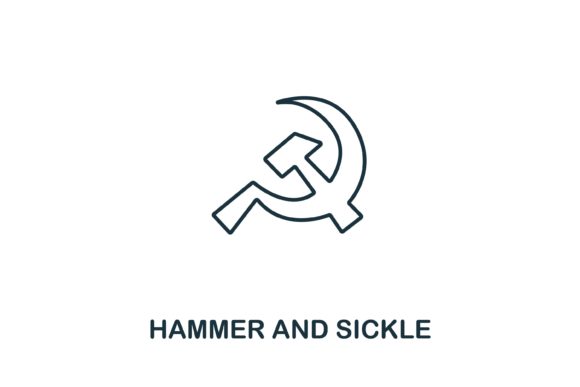
The Hammer and Sickle remains one of the most instantly recognizable geometric symbols in modern history. For designers, educators, and content creators, however, its value often lies less in political ideology and more in visual communication. When sourced from a dedicated Russia collection as a simple line icon, this symbol transforms into a versatile graphic asset. It serves as a powerful shorthand for specific historical eras, industrial themes, or geopolitical discussions. Whether you are building an infographic about 20th-century economics or designing a web template for a history museum, having a clean, vector-based version of this emblem is essential for maintaining professional quality and scalability.
Visual Shorthand in Educational Infographics
Educators and academic publishers frequently face the challenge of condensing complex historical narratives into digestible visual formats. The Hammer and Sickle icon functions as an immediate cognitive anchor for students and readers. In a timeline detailing the Cold War, for example, space is at a premium. A detailed illustration might clutter the layout, but a minimalist line icon conveys the necessary context without overwhelming the surrounding text. Because these icons are typically delivered in EPS format, they can be scaled to fit a narrow sidebar or expanded to serve as a section header without losing crispness.
Beyond basic timelines, this symbol is invaluable for comparative analysis charts. When creating infographics that contrast different economic systems or agricultural policies, the icon acts as a consistent bullet point or legend marker. The simplicity of the line art ensures it pairs well with other minimalist symbols representing capitalism, feudalism, or democracy. This visual consistency helps maintain a cohesive design language throughout educational materials, allowing the audience to focus on the data rather than deciphering inconsistent artistic styles.
Web Design and Digital User Interfaces
In the realm of web design, particularly for sites focused on history, political science, or international relations, navigation clarity is paramount. Users scanning a menu need to identify relevant sections instantly. A Hammer and Sickle icon used as a category marker for Soviet history or Eastern European studies provides faster recognition than text alone. The "simple line" aesthetic is particularly crucial here; heavy, filled-in logos can look dated or aggressive on modern screens, whereas thin stroke weights align with contemporary UI trends like Material Design or flat aesthetics.
Digital designers also benefit from the editability of vector files. Web projects often require last-minute color adjustments to match brand guidelines or accessibility standards. With an editable EPS or high-resolution JPG, you can quickly adjust the stroke color to ensure sufficient contrast against dark mode backgrounds or vibrant accent colors. This flexibility allows the symbol to transition seamlessly from a primary navigation element to a subtle footer decoration, maintaining visual harmony across the entire digital experience.
Editorial and Journalistic Contextualization
Journalists and editorial designers covering geopolitics or historical anniversaries require assets that are informative yet neutral. The stylized nature of a simple line icon offers a degree of abstraction that realistic depictions sometimes lack. It signals the topic—Russia, socialism, labor movements, or post-Soviet transitions—without necessarily endorsing a specific viewpoint. This makes it a safer, more versatile choice for diverse publications ranging from academic journals to mainstream news outlets.
Consider a feature article analyzing current events through a historical lens. Placing a refined vector icon at the start of a pull quote or within a breakout box helps break up dense text while reinforcing the thematic connection. The availability of both EPS and JPG formats supports various publishing workflows; the EPS file is ideal for print layouts requiring bleed and precision, while the JPG serves quick-turnaround digital articles where file size and compatibility are priorities. This dual-format utility streamlines the production process for media teams working under tight deadlines.
Museum Exhibits and Cultural Heritage Projects
Cultural institutions and museum curators often need signage and wayfinding systems that are historically accurate yet visually restrained. When designing exhibits related to Russian heritage or industrial history, the Hammer and Sickle icon serves as a functional directional tool. Its geometric simplicity allows it to be laser-cut into metal, printed on acrylic, or projected onto walls without intricate details getting lost in translation. The line-art style respects the gravity of the subject matter while adhering to modern exhibition design standards that prioritize readability and visitor flow.
Furthermore, merchandise and souvenir design for cultural sites often utilizes these icons. Tote bags, postcards, and enamel pins benefit significantly from clean vector graphics. Complex shading rarely reproduces well on fabric or small metal surfaces, but bold, simple lines translate perfectly. Designers working on such products rely on the scalability of EPS files to create master artwork that can be adapted for everything from a massive banner to a tiny lapel pin, ensuring the symbol remains legible and aesthetically pleasing at every scale.
Navigating Sensitivity and Design Ethics
While the Hammer and Sickle is a potent design element, its application requires thoughtful consideration. Unlike purely decorative motifs, this symbol carries profound historical weight and emotional resonance. Before incorporating it into any project, assess the audience and context carefully. In some regions or communities, the symbol is viewed strictly through the lens of oppression and trauma, making its casual use inappropriate or offensive. Conversely, in academic or specific cultural contexts, it is recognized as a necessary historical artifact.
Designers should also consider the stylistic implications of their chosen asset. A gritty, textured version might evoke propaganda posters, which could be misinterpreted as endorsement rather than documentation. The simple line icon discussed here generally avoids this pitfall by presenting the symbol as a diagrammatic reference rather than a celebratory emblem. Always pair the visual with appropriate textual context to guide interpretation. If the goal is neutrality, ensure the surrounding design elements—typography, color palette, and layout—support an objective tone rather than an ideological one.
Technical Advantages of Vector Formats
For professionals who regularly work with symbolic imagery, the technical specifications of the asset matter as much as its visual appearance. Obtaining the Hammer and Sickle in EPS format guarantees resolution independence. Raster images pixelate when enlarged, creating unprofessional artifacts in large-format printing or high-DPI displays. Vectors remain mathematically precise regardless of zoom level. This is non-negotiable for responsive web design, where the same asset must look sharp on a smartphone and a 4K monitor.
Editability extends beyond scaling. Vector paths allow designers to modify the geometry itself if needed. Perhaps the standard proportions don't fit a unique grid system, or the stroke weight needs to match a custom typeface. With an EPS file, these adjustments are made directly in software like Adobe Illustrator or Affinity Designer without degrading quality. Even for users who primarily work in raster-based programs like Photoshop, starting with a vector source ensures the highest possible fidelity before conversion. The included JPG serves as a convenient preview or fallback for clients and stakeholders who may not have vector editing capabilities, facilitating smoother approval processes and collaboration.